Marine and Land Life of the Caribbean
Made with Slaide: from one sentence to a finished document.


Marine and
Land Life
of the Caribbean
What the sea and the land give the Caribbean, how those living resources are being damaged, and what can still be saved.
living resources
Two worlds, one living system
The Caribbean's living resources are the animals, plants and habitats of its sea and its islands. They are tied together: the reef protects the beach, the mangrove shelters the reef's young fish.
Coral reefs, seagrass meadows, mangrove forests and the open sea: reef fish, spiny lobster, queen conch, sharks and five species of sea turtle.
Rainforest and dry forest, wetlands and mountain cloud forest: parrots, hummingbirds, iguanas and other reptiles, bats and island-endemic mammals.

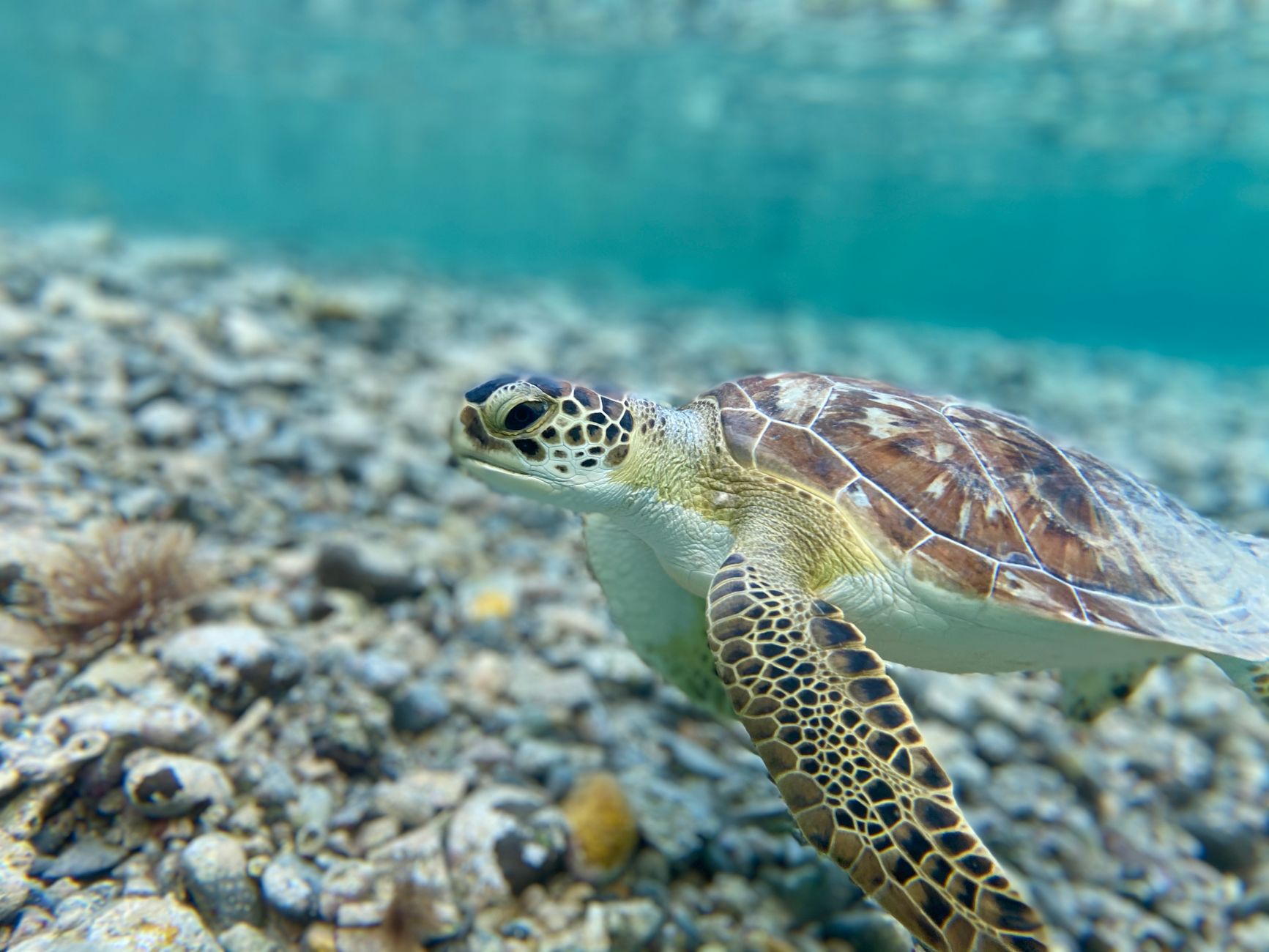

From reef to ridge, across the region
The Caribbean Sea and its islands sit between North and South America. Marine life concentrates on reefs, seagrass beds and mangroves along the coasts; land life concentrates in forests, wetlands and mountain ranges.

What the sea and the land pay for
Four uses run through every island economy: food, visitors, work and science. Each depends on habitats that are still intact.
Small boats land reef fish, spiny lobster and queen conch for local markets, hotels and export.
Diving, snorkelling, birdwatching and turtle-watching fill hotels, dive shops and tour boats from Bonaire to Belize.
Fishers, vendors, dive guides, park rangers and boat crews earn from reefs, mangroves and forests.
Reef monitoring, coral restoration and turtle tagging train students and give managers the evidence they act on.
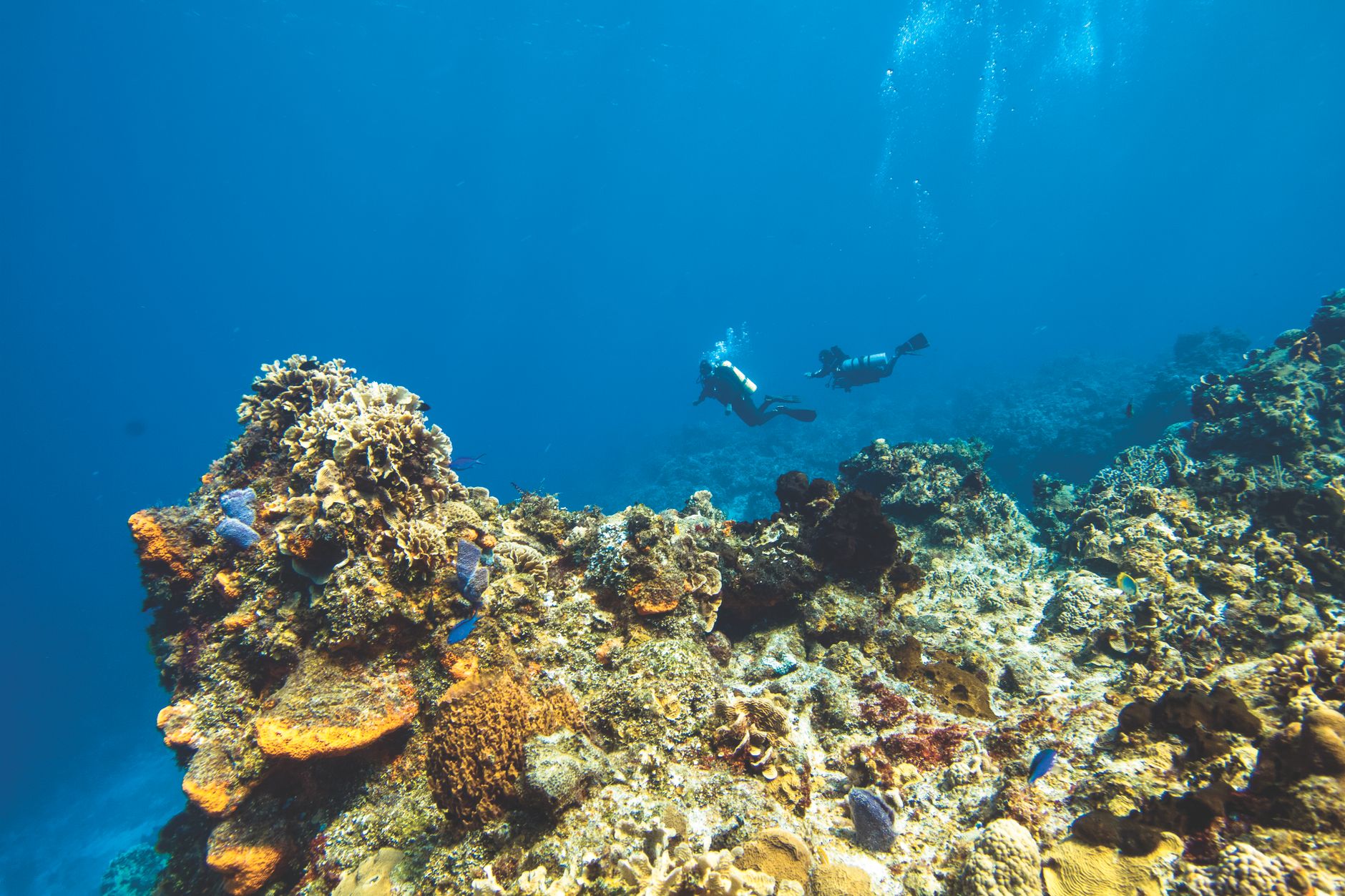
Tourism and fishing are rarely separate: a healthy reef is the asset behind the hotel booking and the fish on the plate. Damage to one habitat shows up in several industries at once.
Five pressures on one resource
Most damage is not deliberate. It comes from how the coast is built on, how waste is handled and how much is taken.


A bleached reef can recover if the water stays clean and fish are left to graze. Clear the mangroves and keep fishing, and recovery becomes far less likely.
Traps and nets take lobster, conch and reef fish faster than they breed. Overfishing affects more than 60% of the region's reefs and removes the fish that graze algae off coral.
Untreated sewage, farm runoff and plastic reach coastal water. Nutrients feed algae, and murky water blocks the light that corals need.
Mangroves are cleared for hotels, marinas and ports, while sand mining and dredging smother the seagrass beds that serve as nurseries.
Marine heatwaves caused mass bleaching in 1998, 2005 and 2023–24, and stony coral tissue loss disease has spread through the region.
Parrots and iguanas are captured for the pet trade and turtle eggs are harvested; invasive lionfish and feral goats add further pressure.
Damage on the reef becomes damage in the household
The effects move in a chain: first the habitat, then the catch and the visitors, then the income and the food supply.
Hard coral cover fell by 48% between 1980 and 2024, leaving fewer places for young fish to grow.
IUCN's ecosystem assessment places Caribbean reefs at high risk of collapse.
Without grazers, algae cover the coral; without mangroves, the nursery for reef fish disappears.
Boats travel further and work longer for the same lobster, conch and reef fish.
Reef-related tourism is worth US$7.9 billion a year; degraded reefs undercut what visitors come to see.
Reefs and mangroves absorb wave energy, so losing them raises the cost of every storm.
Coastal families depend on fish for protein, so thinner stocks hit the poorest households first.
Fishers, dive guides and vendors lose work when the habitats they rely on fail.
Erosion and flooding push communities inland and weaken traditions tied to the sea.
Figures from GCRMN (2025), IUCN (2026) and The Nature Conservancy (2018); chain drawn from the same assessments.
Protection works when responsibility is shared
Rules only work if people follow them, businesses pay for them and governments enforce them. Four groups hold the same resource in trust.


Worth more
alive than damaged
Reefs, seagrass, mangroves and forests depend on each other. Protecting the sea while clearing the coast protects neither.
Hard coral cover has fallen by almost half since 1980, and about two-thirds of reefs face human pressure. The cost reaches catches, visitors and safety.
No-take zones, park fees, seasonal closures and trade rules have brought fish and turtles back. What is missing is scale and enforcement.
Sources used in this research
APA 6th edition. Entries are arranged alphabetically by author surname or organisation name.
Photographs from Pexels, credited on each slide. Map: Darekk2 (ETOPO1, GLOBE), CC BY-SA 4.0, via Wikimedia Commons.
Regional averages, as in the sources above; individual islands vary. Fisheries employment is a lower-bound estimate because much of the sector is informal.